Receive FREE Insights from the editors of IAS by Email


AI spending powers the index and the economy, yet breadth is thin and consumers are strained.

It remains a narrow market led by AI-related names. Despite the S&P 500 trading near all-time highs, the median stock is down by a mid-teens percentage from highs. Key technical indicators also reflect individual stocks are not experiencing the same strength as the index. At the end of the third quarter, just 43% of stocks traded above their 200-day moving average while only 25% of S&P 500 constituents were trading over their 50-day moving average.
In Q3, it was back to large tech leading the way, with the Magnificent Seven up 11% versus the market-cap-weighted S&P 500 advancing a more modest 2% and the equal-weighted S&P 500 down 2%. Small-caps, which are more sensitive to higher rates, fell 7%. Though we have seen brief periods this year where strong market performance has broadened out, lately it has been a replay of the same old theme. Ten stocks account for approximately 40% of the index, and Microsoft, Nvidia, Apple, and Meta Platforms accounted for 200% of the index gain in Q3. According to a recent report from JPMorgan, since January 2024 when the AI trade started to take off, a basket of 42 AI stocks accounted for 60%-80% of all S&P 500 earnings growth, price returns, and capital spending. Over the past three years, only 30% of stocks outperformed the S&P 500 index.
Despite damage under the surface, market rotations have kept overall volatility muted. The CBOE Volatility Index has remained in the mid-to-low teens, reflecting relative index-level calm. The recent day-to-day price action suggests the market is moving at least as much on rotational dynamics as on underlying company fundamentals, though this is unlikely to be a long-term phenomenon.
While AI-related concerns occasionally weigh on markets, the AI trade remains the primary driver of the index. Company investment behind AI remains full-go, with Alphabet, Amazon, Microsoft, and Meta Platforms projecting more than $1 trillion in capital expenditures in 2027 alone, up about one-third over 2026. For comparison, the aggregate capital expenditures for these companies in 2022 was approximately $150 billion. Confidence these massive expenditures will ultimately pay off continues to be key for the overall health of the market.
The economy continues to experience strong nominal growth aided by AI-related investments and elevated deficits. Bloomberg estimates AI-related investments accounted for approximately half of the U.S.’s roughly 2% real GDP growth over the past year. The September jobs report showed the labor market remains generally healthy, though nonfarm payrolls increased 29,000, below expectations of closer to 90,000, with a 60,000 aggregate downward revision to jobs added over the prior two months. The economy remains in a low-hire, low-fire environment. The unemployment rate unexpectedly ticked higher to 4.2%, though this partly reflected an increase in the participation rate to a four-month high, a positive development.
Consumers continue to manage elevated oil prices. Brent crude is trading above $100 a barrel, higher than about $70 per barrel in February, just prior to the Iran conflict. A combination of higher energy prices and interest rates is weighing on consumers, with consumer sentiment recently hitting its lowest level in five months. Still, consumers continue to open their pocketbooks, with spending in August rising at the fastest pace in more than a year. There are concerns that at some point the remarkable consumer resiliency will wobble given higher overall inflation and slowing wage growth. Average hourly earnings, adjusted for inflation, declined in September from a year earlier for the sixth consecutive month. Consumer stocks already reflect some investor concern and collectively have significantly underperformed the S&P 500 this year.
For investors, a market this narrow is a reminder to look beyond the handful of names driving the index. As always, we preach earnings growth and diversification.
Next week, we’ll continue the discussion with a look at the Fed’s rate path, the climb in Treasury yields, and why earnings remain the market’s anchor.
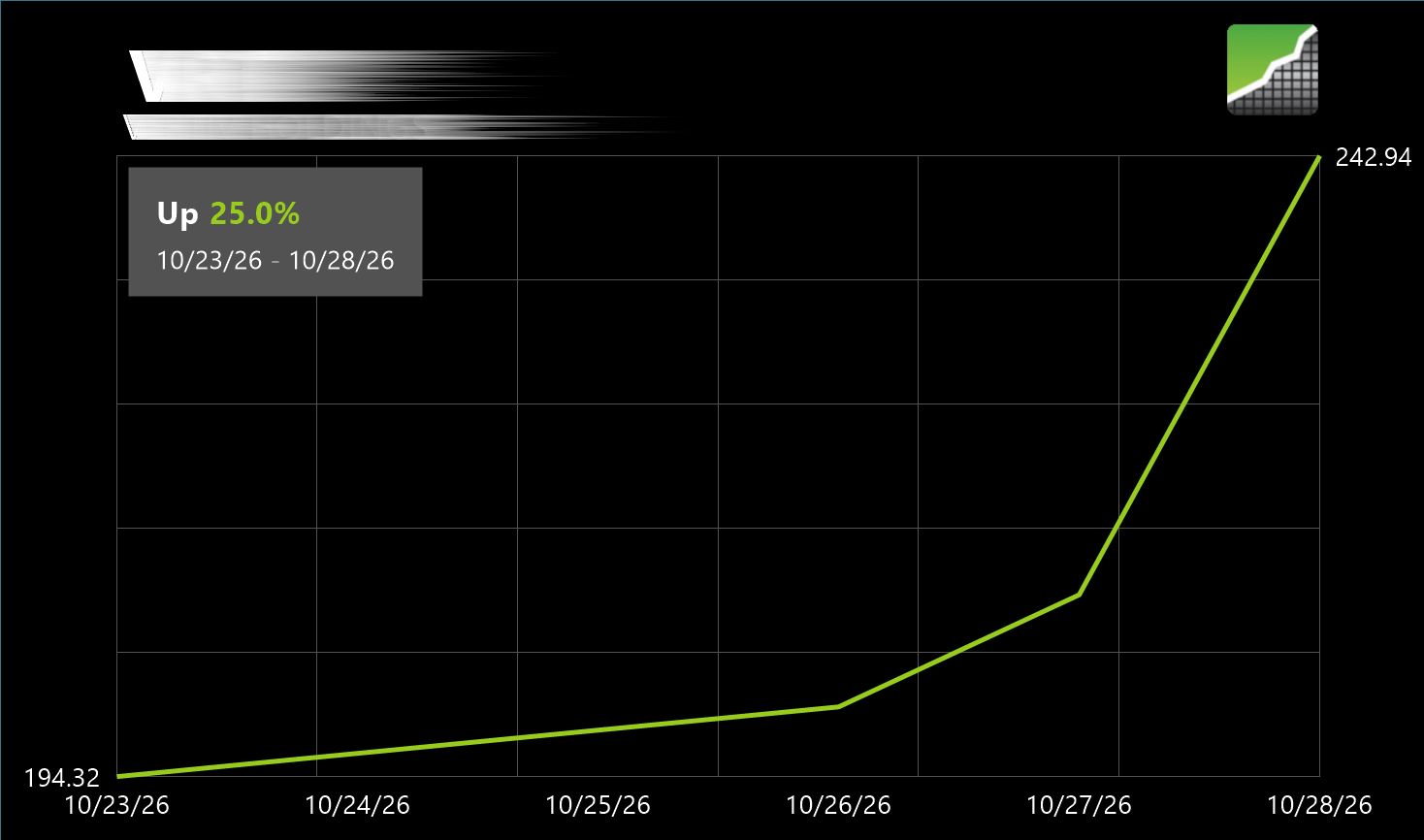
In the November 2026 issue of IAS, our analysts recommend two large-cap stocks. The first, a leading supplier of data center power and cooling systems in the industrials sector, is positioned to benefit from AI-driven demand for liquid cooling and projects a 23.8% compound annual total return with an upside/downside ratio of 3.7 to 1. Its shares ran hot right out of the gate after being featured in the issue, gaining 25% in the first five trading days after publication!
The second, a technology company whose cloud-based platform runs point-of-sale, payments, and payroll for about 180,000 restaurant locations, projects a 21.0% compound annual total return with an upside/downside ratio of 3.2 to 1.
Subscribe today to unlock these and other top picks!
The commentary is excerpted from the issue of the Investor Advisory Service newsletter published at the end of October 2026. To receive commentary like this in a timely manner and receive actionable stock ideas each and every month, subscribe today. The Investor Advisory Service stock newsletter was named to the Hulbert Investment Newsletter Honor Roll for the 17th consecutive year for outperforming every up and down market cycle since 2007.
For more information about the Investor Advisory Service, to download a sample issue, or to subscribe to the best investing newsletter in the U.S. for long-term consistent returns, visit Investor Advisory Service.
©Equity Research Service. All Rights Reserved. Privacy Policy. Terms of Use.